
Your Calendar Is the Only Honest Document in the Building
I've sat across from a lot of owners who told me they haven't had a free minute in months, then opened a calendar with three or four entries a day and long stretches of white space between them. Both things are true. The white space is where the day actually goes: a question at the office door, a file somebody's stuck on, a call the team didn't know how to handle, a quick look at an estimate that turns into an hour. The strategic plan says growth, leadership, and building the team. The calendar says where the hours went, and the empty parts say it loudest. An owner calendar audit is the fastest honest look at what your business actually runs on, and it takes about an afternoon.
Why the Calendar Tells the Truth the Plan Won't
A strategic plan gets written once a year, on purpose, usually somewhere with good coffee and a whiteboard. It describes the firm you intend to run. The calendar gets written every day, under pressure, one small decision at a time. You accept this meeting, you move that block, you skip the planning session because a file blew up. Each of those choices is a vote about what matters this week, and two weeks of votes will tell you more than the plan does.
The calendar also leaves things out, and what it leaves out always runs in the same direction. The drop-ins, the "got a minute" conversations, the texts from the team at 8:30 at night, and the Saturday morning spent catching up never make it onto the page. So when a busy owner's calendar looks sparse, treat the empty space as a finding. It usually means the owner spends the day getting pulled into other people's work, and none of it was planned well enough to earn a block. That holds in a public adjusting firm, a first-party law firm, or any business where the owner used to be the best producer in the building.
The First Read: Which Owner Showed Up This Week
Start with Clockwork, Mike Michalowicz's model for designing a business that runs itself, laid out in Clockwork, Revised and Expanded. Clockwork sorts all work into four modes, which Mike calls the 4D Mix. Doing is the work itself. Deciding is making calls for the people who are doing the work. Delegating is assigning work and managing the result. Designing is working on the business: its direction, its structure, and what it becomes next. As a Clockwork Certified Partner, this is the first lens I put on any owner's calendar. The long-term goal for an owner is to spend all of their time in Designing.
Go through your last two weeks and tag every block with one of the four. Then tag the white space as best you can remember it. The pattern I see most often is Doing on top, Deciding filling the gaps, and Designing at zero, or showing up as a single block that got moved twice and then deleted. That block tells you something too. The one that keeps getting moved is the one you privately believe is optional.
The white space nearly always belongs to Doing and Deciding on somebody else's file. That's a $100 person doing $10 work, and because the value belongs to the person rather than the task, the firm pays the $100 rate every time. None of it shows up where you'd think to look.
The Second Read: Which Parts of the Business Got Any of Your Time
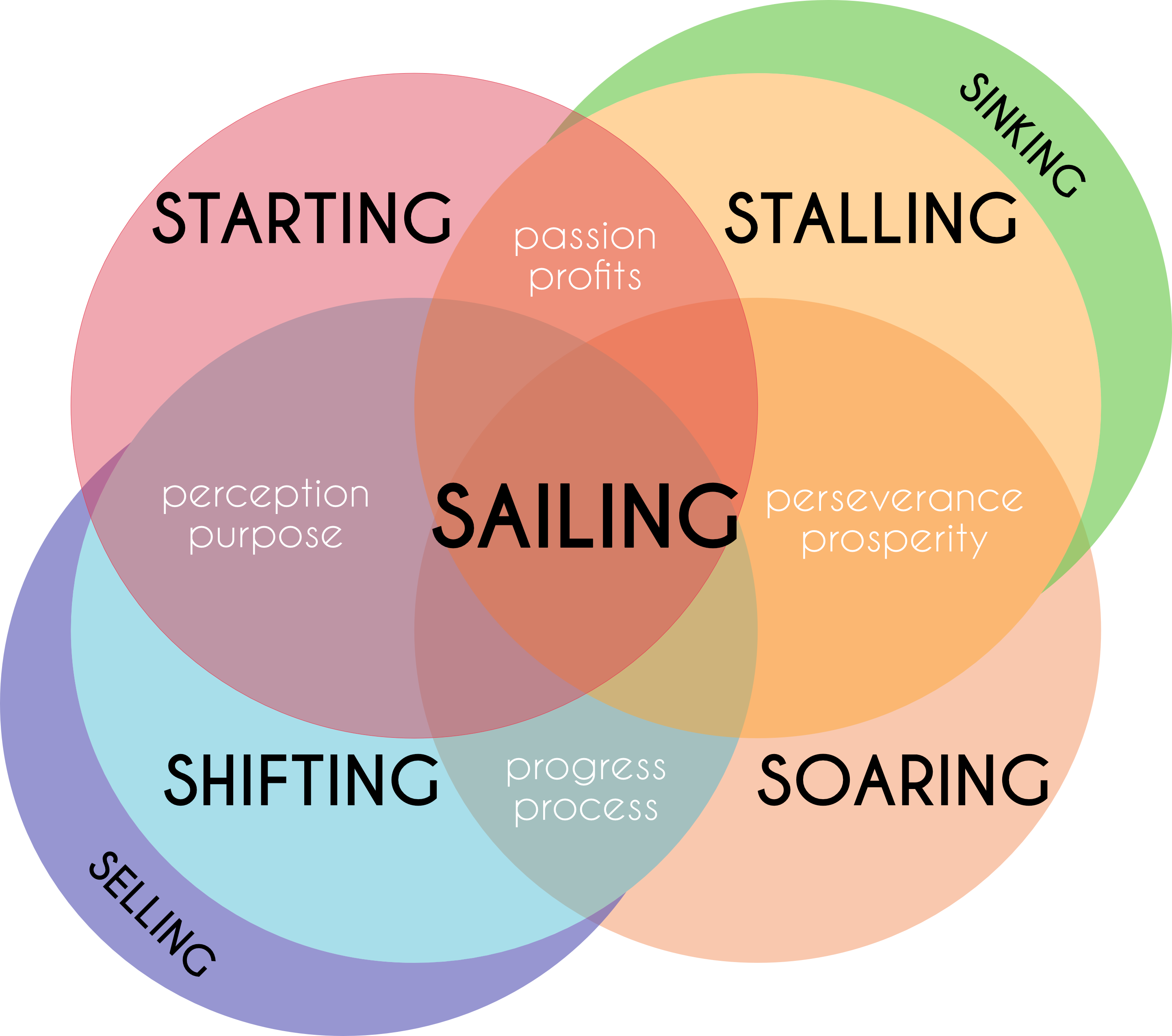
The first read tells you which owner showed up. The second tells you which parts of the business got any attention at all. For this one I use the eight elements from the 7Seas of Entrepreneurship, the framework I built to describe what every business runs on. Four are Foundation elements, which describe what the business is:
Purpose: why the business exists, used as a filter for real decisions
Passion: the fuel that keeps the owner and the team in the work
Perception: what clients, referral sources, and the market believe about you
Profits: pricing, margin, and cash
The other four are Operational elements, which describe how the business runs:
Process: systems, documentation, and delegation
Perseverance: the capacity to keep going under sustained pressure
Progress: measurement, and knowing whether motion is actually advancement
Prosperity: wealth beyond revenue, including an honest answer to how much is enough
Six of these can be a meeting. Tag every block that isn't the work itself to the element it served. Three findings come up again and again.
The largest bucket usually isn't an element at all. It's the work: client calls, the estimate queue, file reviews, carrier correspondence. That work is real and somebody has to do it, but time spent inside the practice is time nobody spent on the business. Profits and Process get time because they break loudly, as a cash question or a system that failed this morning. And the element missing most often is Progress. Across the firms I work with, the thing I most often don't find on an owner's calendar is a status meeting. There's no weekly check-in with the team, no standing meeting with each department, and no one-on-ones with the people carrying files. Without those, the owner finds out where things stand the only other way available, by walking into people's work. That's where the white space goes. The missing meeting and the missing hours are the same problem seen from two sides.
Passion and Perseverance never get a meeting, and they shouldn't. Nobody books an hour for grit. These two show up as patterns across the two weeks, and you read them from how the calendar behaves rather than from what's on it. Passion shows in what you protect: which blocks survive the week, which get moved first, and whether any hours go to work you love and are good at. Perseverance shows in the bad week. Find the worst stretch in your two weeks and look at whether the calendar held its shape or collapsed into Doing, and whether the planning time was the first thing to go.
Your Owner Calendar Audit Should Match the Sea You're In
The 7Seas framework describes seven phases a business moves through, often more than once and not in a fixed order. In each one, four of the eight elements carry the load and the other four matter less for now. Those four work as two pairs. One pair does the work of moving the business, which I call the mainsail. The other pair shows the symptoms first, which is the headsail, because that's where trouble becomes visible before anywhere else. The pattern I see over and over is owners spending their hours on the pair that hurts and leaving the pair that would change things untouched. Two examples make it concrete.
Stalling. Revenue has been flat for a few quarters, effort hasn't changed, and the owner's enthusiasm is fading. The headsail in this Sea is Passion and Profits, so that's where the calendar goes: marketing meetings, pricing conversations, a new referral push, maybe a conference to get fired up again. The mainsail is Perseverance and Prosperity. Prosperity, the question of what success means now and what's actually sufficient, never gets a meeting. Perseverance shows up as collapse, with the planning block gone the first week things get hard. The owner is busy, the calendar looks responsible, and the firm stays right where it is, because pushing harder on the same setup produces more of the same result faster.
Selling. In the 7Seas framework, Selling means preparing the business for a transition, whether that's a sale, a succession, or a handoff to a leadership team. It has nothing to do with sales technique. Here the headsail is Purpose and Perception, the story of the firm, and the mainsail is Process and Progress, the documented operation a buyer or successor actually prices. Owners in this Sea fill their calendars with the story: advisor calls, positioning, conversations about what the firm might be worth. The status meetings are still missing, which means Progress, the element that proves the firm measures itself without the owner in the middle of it, isn't on the calendar at all. Buyers price the machine. A calendar spent on the story tells you the machine hasn't been built yet.
A calendar can be full, balanced across all four Clockwork modes, and still aimed at the wrong four elements. Which Sea you're in is its own question, and it's worth answering before you start rearranging your week. The 7Seas assessment is a good place to start on it.
What an Honest Calendar Looks Like
An honest calendar is one where the plan and the calendar describe the same business. Doing hours shrink a little every quarter, and the white space stops disappearing into other people's files. Standing status meetings with the team, each department, and the people carrying the work show up every week, so the owner learns where things stand without walking into anyone's office. A Designing block survives a bad week instead of being the first casualty. The two elements your current Sea depends on appear on the calendar by name, every week, whether or not anything is on fire. None of that requires a new app or a color-coding scheme. It requires the owner to decide what the calendar is for, and then defend it.
Reading It Is Free. Changing It Is the Work
The audit costs you an afternoon. Changing the calendar is harder, because every block and every interruption belongs to somebody's expectation: a client used to calling your cell, a team member used to walking in, a referral source, and your own habits. Pull one of those threads and the others move. That's the work we do in the VIP Intensive. Over three days at our office, with the owner in the room for all three, we put the real calendar on the table, read it against the business you're actually in, and rebuild your weeks around the elements that move it. You get the written plan fourteen days later. If your last two weeks just told you something you didn't want to hear, start with a discovery call.

This site uses graphics created using tools including ChatGPT and images sourced from Magnific under a commercial license.
All assets are used in accordance with their respective terms and licensing agreements.